
A sewer problem is probably the last thing anyone wants to discover on a quiet Sunday morning. Yet slow drains, strange bubbling sounds, and unpleasant odors have a way of appearing when you least expect them. What begins as a minor inconvenience can quickly interfere with the entire household.
The biggest challenge is figuring out whether you’re dealing with a simple obstruction or something more serious beneath your property.
Experienced sewer line repair contractors can help homeowners investigate these problems, understand the condition of their underground pipes, and decide which approach offers the most practical long-term solution.
Before committing to expensive plumbing work, though, it helps to understand why sewer pipes fail and what different repair options actually involve.
Recognizing the Early Signs of Sewer Line Damage
Sewer pipes rarely fail without providing some indication that something isn’t quite right. Unfortunately, the earliest warning signs are often mistaken for ordinary household plumbing problems.
You might notice that the kitchen sink drains slowly despite being cleaned recently. Perhaps the toilet bubbles when someone empties the bathtub, or an unpleasant odor keeps returning near a floor drain.
When several fixtures experience problems simultaneously, the main sewer connection could be involved.
Outside, unexplained wet patches or unusually lush sections of grass may also warrant investigation, particularly when accompanied by unpleasant smells.
These symptoms don’t automatically confirm pipe damage. However, ignoring them isn’t a particularly sensible approach.
Getting an accurate diagnosis early may help prevent wastewater backups and unnecessary damage to your property.
Finding the Actual Cause Instead of Treating Symptoms
There’s something frustrating about repeatedly paying to clear a blocked drain without understanding why the problem keeps returning.
Effective sewer line troubleshooting involves examining the drainage system, identifying the source of the problem, and determining whether cleaning, structural repairs, or replacement is necessary.
Specialized inspection cameras allow plumbing professionals to examine accessible sections of underground pipes without immediately resorting to extensive excavation.
The footage may reveal intrusive tree roots, accumulated grease, cracked connections, or partially collapsed pipe sections.
Some problems are relatively straightforward to resolve. Others require considerably more attention.
For instance, removing tree roots might restore drainage temporarily, but repairing the damaged opening through which they entered could provide a more dependable solution.
Understanding the underlying cause helps homeowners spend their money where it actually matters.
When Replacing the Entire Sewer Pipe Makes Sense
Nobody wants to replace an underground sewer pipe unnecessarily. It’s a significant property improvement that may involve substantial expense and disruption.
However, there comes a point when repeatedly repairing deteriorating infrastructure offers diminishing returns.
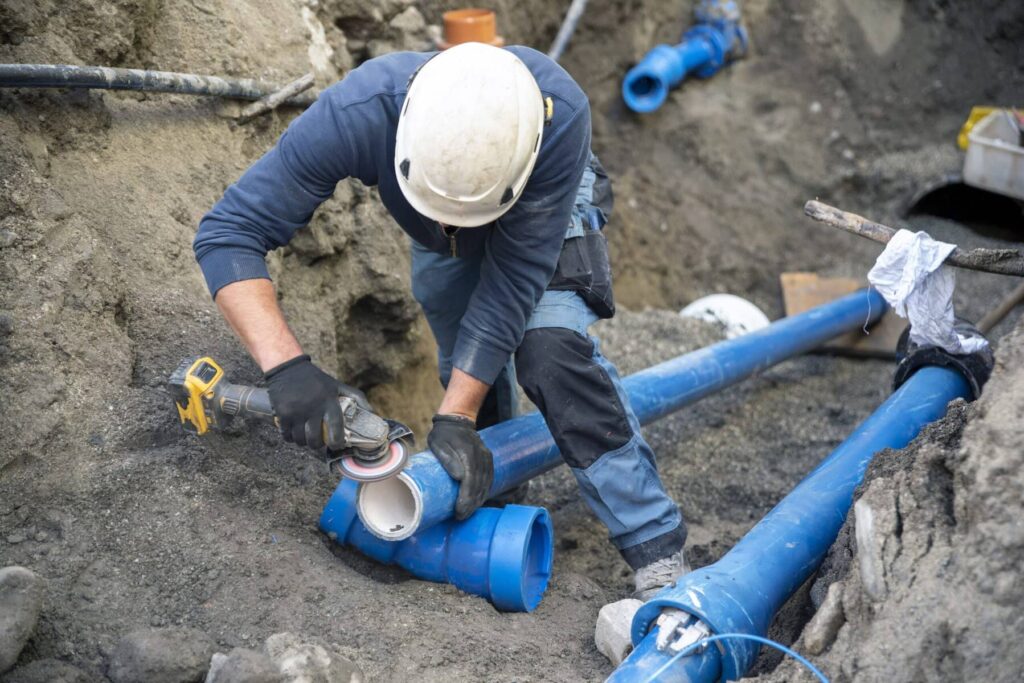
Homeowners considering sewer line replacement services should evaluate the age of their existing pipes, previous repair history, structural condition, and frequency of drainage problems.
Older sewer systems may contain materials that have gradually become vulnerable to corrosion, cracking, or joint separation.
If several sections are already deteriorating, repairing individual failures might simply postpone the inevitable.
Replacement provides an opportunity to install suitable modern piping materials and address existing structural concerns.
Ask your contractor to explain why replacement is recommended rather than a localized repair. A clear explanation supported by inspection findings can make this important decision considerably easier.
Exploring Alternatives to Traditional Excavation
For many homeowners, the thought of sewer repairs immediately brings to mind torn-up lawns, damaged driveways, and days of construction activity.
Fortunately, certain projects may qualify for trenchless repair or replacement techniques that reduce the amount of excavation required.
Methods such as pipe lining and pipe bursting can provide practical alternatives under suitable circumstances.
However, these approaches aren’t appropriate for every damaged sewer system. Pipe alignment, structural condition, surrounding utilities, soil characteristics, and available access points all influence their suitability.
Traditional excavation remains necessary in some situations, particularly when damaged infrastructure requires direct access.
Before approving any work, discuss how the proposed method could affect your landscaping and surrounding property.
Knowing what you’re getting into beforehand can prevent quite a few unpleasant surprises.
What to Ask Before Hiring a Sewer Repair Professional
Choosing a contractor involves more than comparing estimates.
Ask whether the company has experience addressing problems similar to yours. Confirm relevant licensing and insurance requirements, and request a clear explanation of the proposed work.
It’s also worth discussing whether excavation, permits, debris removal, and landscape restoration are included in the estimate.
A seemingly inexpensive quotation may become considerably less attractive once additional expenses appear.
Discuss warranty coverage and any limitations associated with the recommended repair.
A dependable contractor should be comfortable answering questions and explaining technical details in straightforward language.
After all, it’s your property and your investment. Understanding what’s being done shouldn’t feel like an unreasonable request.
Protecting Your Sewer Pipes After Repairs
Once drainage problems have been resolved, a few sensible household habits can help reduce future complications.
Avoid pouring cooking grease into kitchen drains. Dispose of wipes, paper towels, and hygiene products in the trash rather than flushing them.
Pay attention to recurring slow drainage or unusual noises.
If sewage backs up, stop using household plumbing, avoid contact with contaminated areas, and arrange professional assistance promptly.
Properties with previous root intrusion or other recurring problems may benefit from periodic inspections.
Making a Decision That Benefits Your Home in the Long Run
Dealing with underground plumbing isn’t particularly enjoyable, but making informed decisions can prevent unnecessary expenses and repeated frustrations.
Start with an accurate diagnosis, consider the condition of your existing pipes, and choose repairs that address the underlying problem.
A dependable sewer system quietly supports your everyday routine. Looking after it before small concerns become serious emergencies is one of the more practical investments you can make in your home.